
Introduction
Technology has become ingrained in our lives since the beginning of human civilization. Every major leap in technology has changed how humans live and enact daily rituals – namely, the discovery of fire, the invention of the wheel, the advent of the industrial revolution, and more recently, the digital age. Today, that dramatic change in technology may very well be the most profound in human history. The 21st century has already witnessed incredible advancements in smartphones, artificial intelligence, biotechnology, even space exploration. We are truly in a revolution that affects nearly every aspect of human life (social, economic, educational, medical, cultural, and even psychological) broadly due to modern technology and its implications.
In this article, we will explore modern technology and its implications for life and discuss the advantages, concerns and possible futures.
1. Modern Technology
Modern technology encompasses new systems (in both a human and technical setup), tools and devices and processes developed in the previous few decades, primarily driven by computers, internet, and innovative developments within both scientific and engineering disciplines. Modern technology is fundamentally stuck to the following areas when compared to older concepts of technology:
> Digitalization: Information is converted to a digital format and storage, then transfers of information are made very easy.
> Automation: Process systems & Machine have implications for tasks performed with little or no human preparation.
> Global Connectivity: Communication and Networking is on a global scale.
> Artificial Intelligence (AI): Machines continue to be developed that simulates human behavior and decision making.
> Biotechnology and Nanotechnology: New discoveries that can control and manipulate life and substance on the microscale.
Technology today is more than a single emphasis; it encompasses all areas, changing how we work, learn, engage, and think.
2. The Positive Contributions of Technology Today
2.1. Education
Rather than a rigid process in a specific format and time table, we now have a lifewide, flexible, enjoyable process to learn and develop in. We have heard of e-learning, digital libraries, and remote access to various places. Now students in rural areas can access the BEST resources compared with students in larger cities. And collectively, augmented reality and virtual reality can make this an interactive process and artificial intelligence can modify learner experiences.
2.2. Communication
We are now away from a world of letter writing where communication takes weeks to months. Now, with smartphones, email, and instant messaging we can engage with people anywhere in the world in real time. Social media now allows for continuous dialogue and sharing of thoughts and ideas which can cross cultural and geographical boundaries to collaborate, make new friends, create movements for social change, etc.
2.3. Healthcare
Technology has brought sweeping changes to healthcare. Telemedicine allows doctors to conduct consultations with patients from a distance, which saves time and lives. Other advancements in medical imaging, robotic surgeries, wearable health trackers, artificial intelligence-assisted diagnosis, and biotechnology have made treatments safer than they have ever been. Biotechnology has led to research and innovations in gene editing, personalized medicine, and vaccines made in record time—as evidenced during the COVID-19 pandemic.
2.4. Economy and Business
Technology today has enabled global growth. E-commerce systems like Amazon and Alibaba have completely changed the shopping experience and made it easier than ever to purchase things with a click of the mouse. Big data, cloud computing, and artificial intelligence will continue to help businesses work smarter and provide better customer service. The emergence of start-ups is a direct result of the digital world we live in and many times these entities involve little or no physical infrastructure. The new variety of remote work allowed by digital contributions has also provided job opportunities on a global basis.
2.5. Transportation
Similar to the effect of technology on distances, new transportation technologies have made shorter distances to the globe seem very attainable. With instances now like mass transit systems including high-speed trains and electric vehicles, the options for transportation are abundant, efficient, and safe. The emergence of autonomous vehicles has made transportation without carbon emissions a potential reality, while advances in aviation technology have enabled transport across oceans or from one continent to another in a few hours. As possibilities for transportation grow here on earth, technology is attempting to create possibility beyond earth, with many countries continuing to invest in research for space exploration.
2.6. Environmental Solutions
Technology helps combat climate change: – Solar, wind, and hydropower -> renewable energy – Electric vehicles -> reduced reliance on fossil fuels – Smart agriculture -> improved food security

Negative Effects of Modern Technology
1. Social Isolation and Mental Health
The issues of social isolation can also be a byproduct of all the virtual connectivity the technology provided. Those using social media excessively, especially among teens, are more likely to experience loneliness, anxiety, and depression.
2. Job Displacement
Many traditional jobs are being taken over by automation and artificial intelligence. Employees in manufacturing to retail and even professional realms are facing uncertainty, unemployment, and skill transformation gaps from the time change since they will not be able to adapt to technological advances and developments.
3. Privacy and Security Threats
Several threats are exposed from the digital world, including cyberattacks, hacking, and data breaches, which exposes personal data. Surveillance, government or corporate misuse of data, and privacy concerns through the technology we use and manufacturing (such a data mining) are also possible concerns or threats.
4. Environmental Pollution
While some forms of technology actively attempt to reduce pollution, other forms do more harm than good. E-waste (or electronic waste) from obsolete devices. Energy consumption as a result of data centers and cryptocurrency mining.
5. Overdependence on Technology
We have created a society that is as dependent on gadgets and the internet as perhaps ever. Without the systems we come to rely on, communication, banking, healthcare, and transportation are all affected negatively, sometimes catastrophically.
Modern Technology in our Daily Lives
At Home
Smart homes are full of comforts (e.g., voice assistants) and safety (e.g., smart security cameras) along with automated appliances and other functions.
At Work
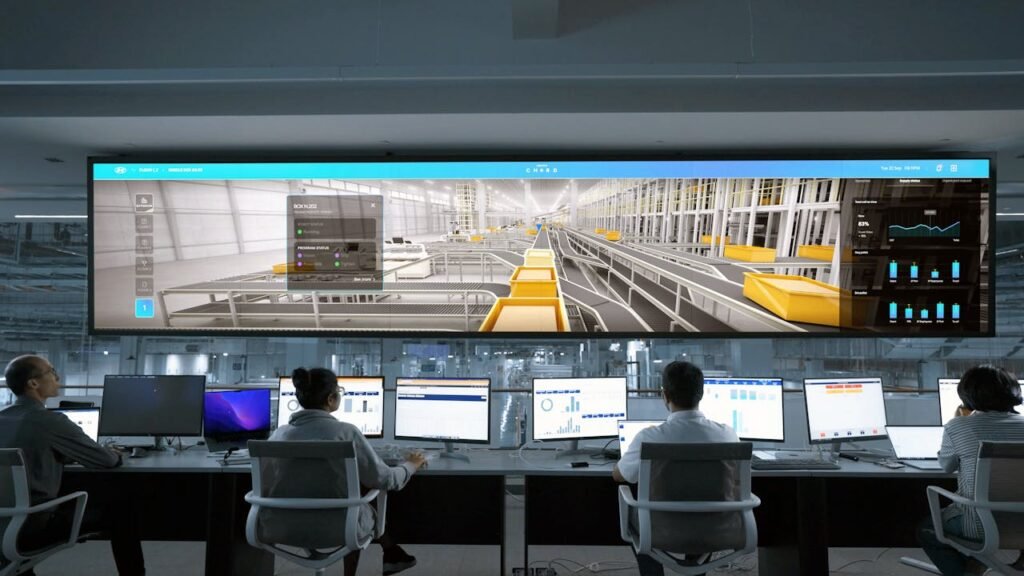
With the advent of tools for remote workers, cloud computing, and project management, collaboration is ubiquitous.
In Entertainment
There are endless entertainment choices with streaming services and online gaming, including online immersions with virtual reality.
In Relationships
Social media and dating apps have changed the way friendships, love, and family are approached.
Technology and Life – Striking a Balance
The ultimate goal should establish equilibrium with technology, not to rid ourselves of it. To achieve this end goal some approaches are as follows:
1. Digital literacy – To promote an educated society that uses technology reasonably.
2. Work-life balance – Put limits on screen time and ensure face time is prioritized.
3. Ethical innovation – To encourage businesses to use sustainable technology.
4. Policy regulation – Governments should make technology that is useful to cyber security, data protection and combating access inequalities.

Where We’ll Go in the Future of Modern Technology
Technology will be essential in the continued evolution of life, we can only speculate about its future:
> AI – It covers everything from smart machines to self perform and act.
> Space Technology – Human colonization of Mars and asteroid mining.
> Biotech – Science in modifying human genetics, synthetic organs and fights against aging.
> Quantum Computing – Changing the way we process data while strengthening encryption and offloading more complex problem solving to compute.
> Metaverse and Virtual Reality – Where digital life and physical life spend more time together.
Concluding
Thoughts Modern technology offers significant advancements in how a society communicates, learns, provides health and extends sustainability. In addition, it opens us up to equal opportunities, job loss and even social isolation. Modern technology has impacted our large level of influence by how we think, work and relate. If the fact that, we continue advancing as a society means we have to keep evaluating the balance achieved with responsible ethics, human empowerment not dissociation and cooperation not division.
